
Live · taking orders10,958 lines · storefront + API
Ocean Drift Thrift
A full e-commerce platform for a real resale business — storefront, API, and media pipeline.
Visit site ↗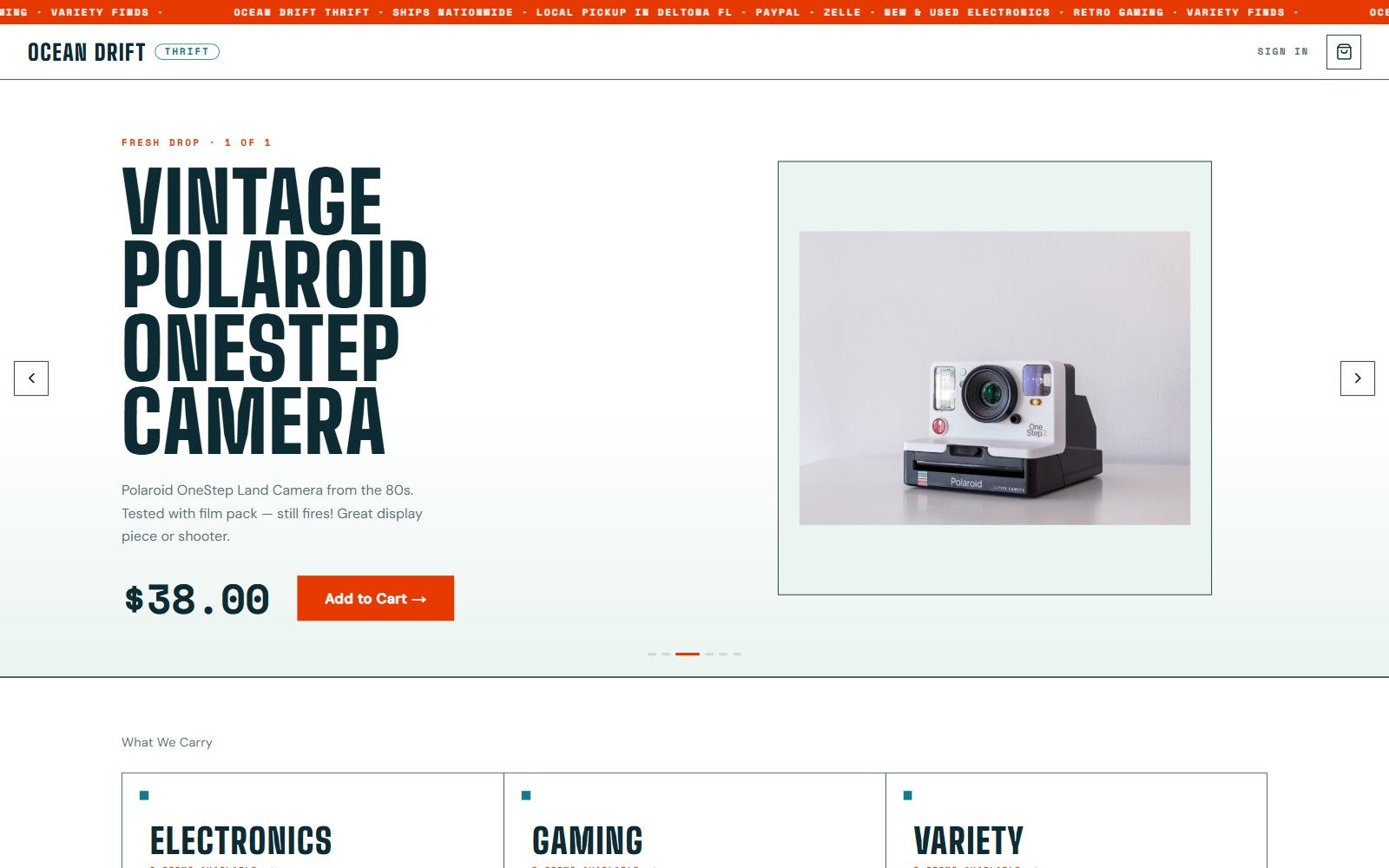
What it is
A working Deltona resale business selling new and used electronics, retro gaming gear, and variety lots. Every item photographed and tested, shipped nationwide or reserved online for local pickup.
The build is a monorepo: a Next.js storefront and a separate NestJS API, with S3 for product media, Redis for sessions and caching, and JWT authentication. Splitting the API out means the storefront can be replaced or restyled without touching the part that handles inventory, orders, and money.
I ran a used-game and electronics store myself for three years. Every decision here — how you photograph a one-of-one item, why condition notes matter more than descriptions, what a customer needs to see before buying used — comes from standing behind that counter.
The parts that were hard
- Single-quantity inventory: resale stock is one-of-one, so overselling isn't a rounding error, it's a refund and an apology
- Product media pipeline — upload, process, and serve real photographs of individual items via S3
- Split storefront and API so the customer-facing layer can change without risking order data
- Session and cache layer in Redis
- JWT authentication with hashed credentials
- Containerized deployment with a scripted, repeatable release
Need something built at this level?
You talk to the person who writes the code — about the architecture, the trade-offs, and what it costs. Two questions to start, and a reply within one business day.